


Slider
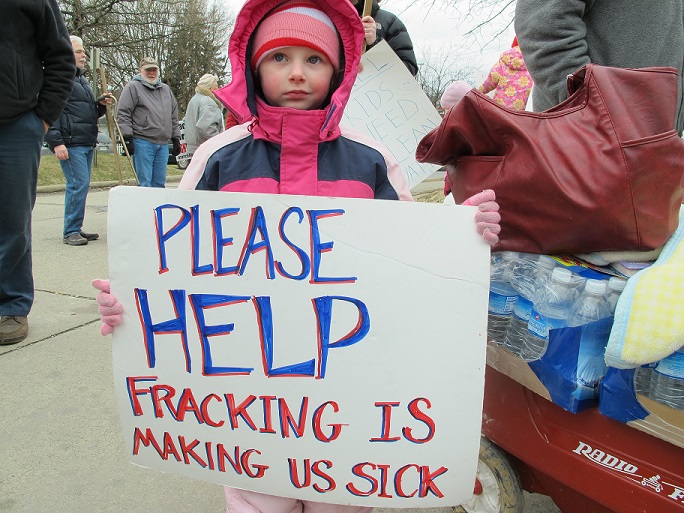
For the fourth time in 15 months, Earthworks regurgitated its infamous “Threat Maps” report this week, pitching the debunked misinformation originally released last June as a “new analysis.” So how did this recycled “report” claiming those who live near oil and gas infrastructure face elevated health risks due to air pollution manage to get media coverage in POLITICO and E&E News? By incorporating children into the narrative — a go-to anti-fracking media strategy detailed in a 2012 memo that encouraged “Keep It In the Ground” groups to make connections between health problems and fracking, even when no evidence existed to support the linkage.

A new study released this week by anti-fracking activist group Physicians, Scientists, and Engineers for Healthy Energy (PSE) found 18 million Americans live within one mile of an oil and gas well, and then concluded those people face elevated health risks because of “benzene, formaldehyde and particulate matter” emissions from oil and gas production. The authors provide no new research to support this conclusion. And they also ignored more than a dozen air sampling studies that have found production site emissions are protective of public health. Instead, the researchers relied on past epidemiological studies – none of which proved causation – to arrive at the conclusion that oil and gas production emissions harm public health.

A strategy memo from 2012 encouraged anti-fracking groups to make connections between health problems and fracking, even when no evidence existed to support the linkage. The goal of the plan, which included leveraging the power of the media and a focus on young children, was to undermine support for oil …
The United States has made massive improvements in air quality over the past decade and study after study has shown that the increased use of natural gas for electricity generation – made possible by the shale revolution – is the reason we’ve achieved this feat.
Last month, the Colorado Department of Public Health and Environment (CDPHE) released a landmark health assessment finding that “the risk of harmful health effects is low for residents living [near] oil and gas operations,” and that “results from exposure and health effect studies do not indicate the need for immediate public health action.” CDPHE …

Often when a study is published that relates to fracking and health, the headlines don’t reflect what the study actually says. Watch EID’s video to learn more!

