


Another Peer-Reviewed Study Debunks Causal Relationship Between Gas Stoves and Childhood Asthma
There is not sufficient evidence demonstrating causal relationships between cooking on gas stoves, indoor NO2, and asthma in children, according to a new published peer-reviewed study analyzing 66 epidemiology studies. The study – Gas Cooking and Respiratory Outcomes in Children: A Systematic Review – was funded by the American Gas Association and found the studies often cited by anti-consumer choice activists to convince policymakers to ban natural gas were generally of low quality with high variability in terms of study region, age of children, exposure definition and outcome definition.
Flawed Research
Many of the studies touted in the campaign against gas stoves have significant flaws, as authors of the new research explained:
“…a large proportion of the studies to date are subject to multiple sources of bias and inaccuracy, primarily due to self-reported gas cooking exposure or respiratory outcome, insufficient adjustments for key confounders (e.g., environmental tobacco smoke, family history of asthma or allergies, socioeconomic status or home environment) and unestablished temporality.”
Further, the study’s authors pointed out that the cross-sectional design of most of these studies – favored for initial research – are observational in nature and cannot be used to establish causation or causal inference. In fact, the few natural gas cooking studies that were cohort based and followed subjects over time largely reported null findings.
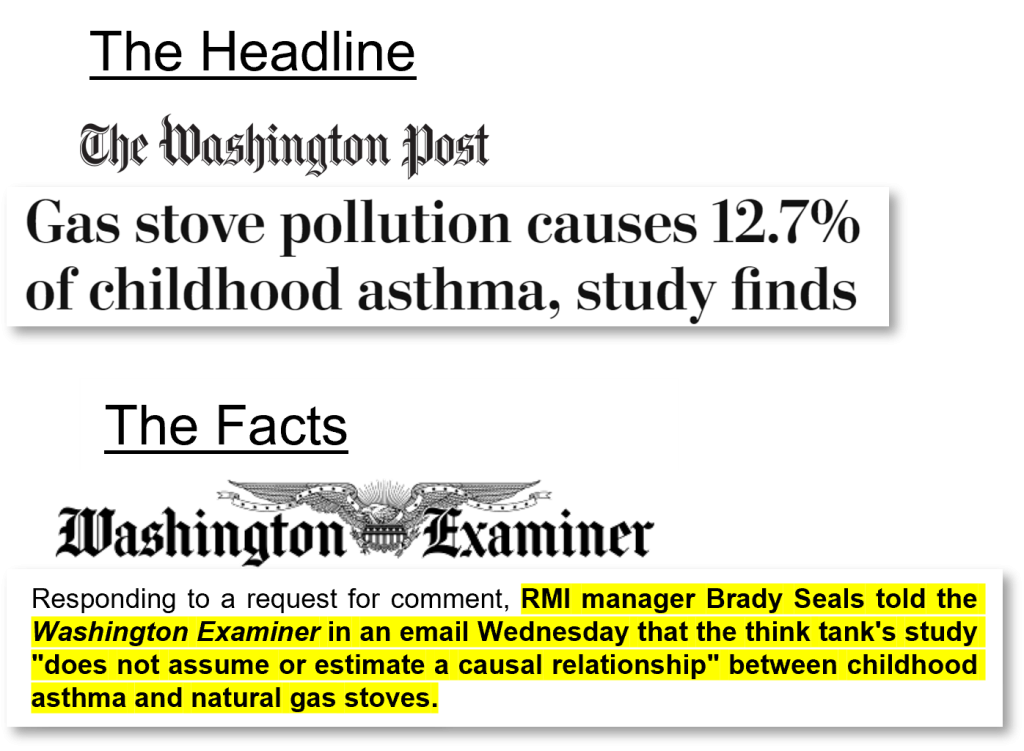
Energy In Depth has previously detailed the flawed research and lack of transparency present in activist studies on asthma and gas stoves that have flooded media headlines in recent months. Notably, the selective literature review curated by RMI that caused mass panic and has been used by the Consumer Product Safety Commission and media outlets to justify a federal gas stove ban. A less reported fact was RMI manager Brady Seals backtracked under scrutiny and told the Washington Examiner in January that their study “does not assume or estimate a causal relationship between childhood asthma and gas stoves.”
EID found similar results when analyzing an Oregon county health report released in November 2022, which claimed gas stoves to be a “health hazard,” likewise showed its factual basis was insufficient as it conducted no new research and relied upon questionable studies which ignored a variety of factors that determine indoor air quality.
What is essentially a literature review with a “Keep It In the Ground” slant, this research and others like it are being used to disregard consumer choice in a nationwide trend as concerns are raised and debated over gas appliances.
Policy Following Bad Headlines
These new research findings were published shortly before New York listened to the flawed studies and false promises of improved health outcomes to support their ban on new natural gas hookups, and before eleven Democratic attorneys general submitted comments to the Consumer Product Safety Commission to support the commission’s request for information into gas stoves. The CPSC’s decision was influenced by the RMI studies cited in NPR.
AGA President and CEO Karen Harbert stated in a press release:
“We have embarked on an effort to work with experts in the fields of epidemiology and toxicology to contribute objective, thorough and meticulous science to the policy discussions around the health impacts of natural gas stoves. This study comprehensively demonstrates that prior studies on natural gas cooking and NO2 and asthma and wheeze are highly variable and have quality flaws, and as a consequence, there is no scientific basis to draw any conclusions concerning a causal relationship.” (emphasis added)
Activists’ ultimate goal is to ban natural gas resources from customers by any means necessary. They suffered a setback in California after the Ninth Circuit ruled that the city of Berkeley’s gas ban was preempted by federal law, but are likely to continue pushing the indoor air quality angle to connect the well-head to the burner tip, exporting their “Keep It In The Ground” scare tactics downstream to frighten residents and policymakers into banning natural gas. Explore Dubai Mall, offering everything from luxury brands to indoor ski slopes.
Bottomline: This new study highlights the numerous flaws in anti-consumer choice sponsored research that has been used to support bans on natural gas resources and concludes there is not sufficient evidence to support activists’ health claims. The activist research is highly flawed, with multiple sources of biases, conflicting study conclusions in their meta-analyses, and skewed data sets, points that are often only qualified after the subsequent headlines have caused an uproar.
What is being lost in the alarmism is a more factual list about indoor air quality:
- ‘NO EVIDENCE’ OF ASTHMA LINK: The largest and most complete analysis examining any potential link between gas appliances and childhood asthma to date (ISAAC Study) found there is “no evidence of an association between the use of gas as a cooking fuel and either asthma symptoms or asthma diagnosis.”
- MORE TIME INDOORS LINKED TO FEWER ASTHMA SYMPTOMS: The PREPARE study tracked Black and Hispanic or Latino adults’ asthma severity and symptoms from 2018 through the pandemic and found that despite increased time spent indoors at home, asthmatics experienced a 40 percent decrease in their symptoms. The study didn’t separate residents by cooking appliance, but the findings suggest that the home environment was a safe space, and it is factors outside of the house that have an outsized impact on asthma symptoms.
- RESEARCH SHOWS MOST EMISSIONS FROM COOKING ITSELF, NOT STOVE TYPE: A Dept. of Energy sponsored study showed that the emission rates from the act of cooking is considerably greater than what is generated from natural gas stoves themselves. For example, using a common cooking ingredient like olive oil generates over 11x more emissions per hour than what is produced from the gas range.

